

The Essential Guide to Semiconductor VOC Monitoring
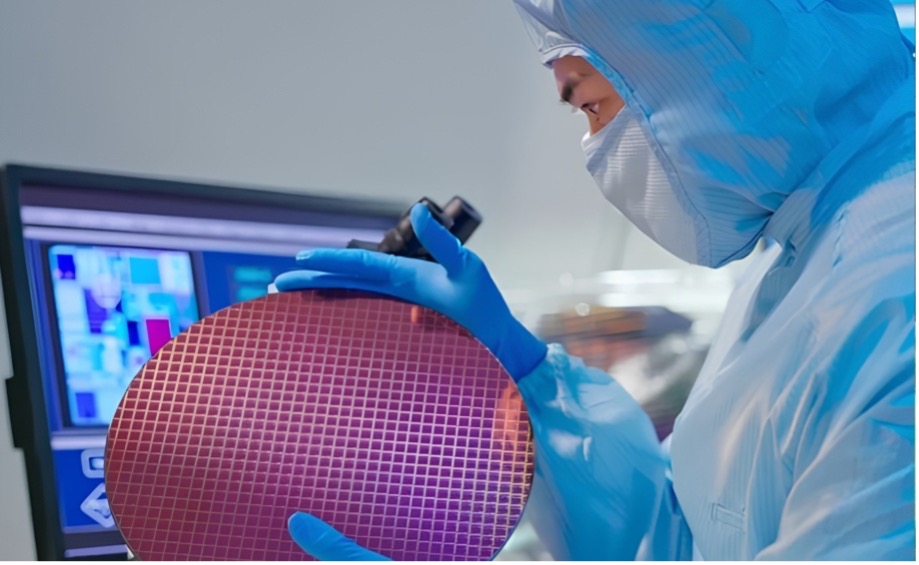
From smartphones and electric vehicles to smart factories and advanced computing, semiconductors underpin many technologies we rely on every day. Their manufacture involves sophisticated processes that demand exceptionally controlled production environments.
Throughout semiconductor fabrication, a wide range of chemicals, solvents and materials are used. These can generate volatile organic compounds (VOCs), creating potential risks to product quality, worker safety and environmental performance.
As semiconductor manufacturing becomes increasingly advanced, reliable VOC monitoring plays an important role in identifying unwanted emissions. It also supports process control and maintains safe, controlled manufacturing environments.
The Challenge of VOC Monitoring
Semiconductor manufacturing involves numerous stages, including wafer cleaning, photolithography, etching, deposition and surface treatment. Many of these processes rely on specialised chemicals and solvents, some of which can generate VOC emissions.
Maintaining the purity of the manufacturing environment is critical. Airborne molecular contamination (AMC), including certain VOCs, can affect sensitive manufacturing processes. It may also compromise wafer quality, reduce production yields and contribute to costly batch losses.
Even very low concentrations of certain chemical contaminants can be significant, making sensitive and reliable monitoring particularly important in semiconductor cleanrooms and other critical production areas.
High-Sensitivity Solutions for Indoor Spaces
ION SENSE supplies OEMs in some of the most hazardous industries and sectors around the world. This has allowed us to test and refine our photoionisation detection (PID) technology in the toughest environments. As a result, we’ve developed a range of VOC sensors designed to ensure superior air quality wherever you are.
For high-sensitivity indoor VOC monitoring, ION SENSE offers the MiniPID 2 HS VOC Sensor. Designed to provide accurate sub-ppb detection limits, it offers significantly higher sensitivity than many conventional PID sensors.
VOC concentrations can increase in poorly ventilated indoor environments, potentially affecting comfort and cognitive performance. Depending on the compounds present and concentration, they may also affect health. By capturing these trace level threats before they accumulate, the sensor provides the vital, early-stage data needed to keep occupants safe.
Why Is VOC Monitoring Important in Semiconductor Manufacturing?
VOCs can originate from process chemicals, solvents, chemical delivery systems, storage areas, manufacturing equipment and cleaning operations. Leaks, maintenance activities, equipment failures and accidental releases can also introduce unexpected emissions.
Monitoring supports three important objectives:
1. Product Quality and Process Control
Maintaining cleanroom air quality is essential for protecting sensitive semiconductor manufacturing processes. Monitoring airborne chemical contamination can identify unexpected changes in VOC concentrations. It can also investigate potential contamination sources and support consistent production conditions.
Where trace-level contamination is a concern, highly sensitive detection technology may be required to help protect manufacturing yields.
2. Worker Safety
The handling, storage and use of chemicals and solvents can create potential occupational exposure risks. Monitoring relevant work areas, chemical handling facilities and maintenance locations can identify unexpected changes in VOC concentrations. It can also support investigations into potential exposure risks.
Selecting appropriate monitoring technology depends on the chemicals involved, the required detection limits and applicable occupational exposure requirements.
3. Environmental Emissions
Semiconductor manufacturing facilities can generate VOC emissions from production processes, chemical storage and exhaust systems. Monitoring exhaust streams, abatement systems and facility boundaries can help assess emissions control performance. It can also identify unexpected releases and support environmental monitoring programmes.
Continuous monitoring can provide valuable information about changes in emissions and help facilities investigate potential issues before they develop into more significant problems.
VOC Monitoring Across the Semiconductor Facility
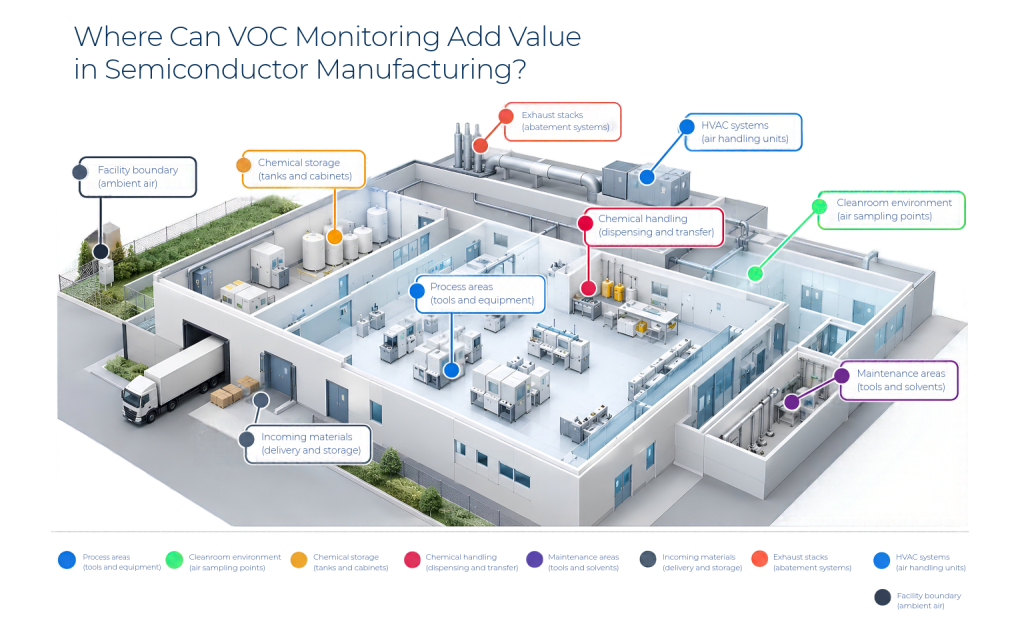
A facility can deploy VOC monitoring at multiple locations throughout a semiconductor manufacturing facility, depending on the application and monitoring objectives.
Typical applications include:
- Cleanrooms: Monitoring airborne chemical contamination to help protect sensitive manufacturing processes.
- Chemical storage and delivery: Identifying potential leaks and unexpected VOC releases.
- Production areas: Monitoring environments where solvents and process chemicals are used.
- Exhaust and abatement systems: Assessing VOC emissions and supporting the evaluation of abatement performance.
- Facility boundaries: Monitoring potential emissions into the surrounding environment.
Fixed monitoring systems provide continuous measurements, while portable instruments can support leak investigations, maintenance activities and targeted environmental assessments.
Reliable and Sensitive VOC Detection
Photoionisation detection (PID) technology provides a practical solution for monitoring many ionisable VOCs across a wide range of applications.
PID sensors offer rapid response, high sensitivity and compact integration. These features make them suitable for fixed monitoring equipment, portable instruments and environmental monitoring systems.
ION SENSE develops OEM PID sensors designed for integration into third-party monitoring equipment, supporting manufacturers looking to incorporate reliable VOC detection into their products.
The MiniPID 2 range offers different detection capabilities for varied applications and monitoring requirements. The MiniPID 2 HS detects very low VOC concentrations with high sensitivity. Other configurations support different concentration ranges.
PID technology can support VOC monitoring across semiconductor manufacturing facilities. Its applications range from cleanroom monitoring and chemical delivery systems to exhaust emissions and environmental monitoring.
Explore our related articles to learn more about the MiniPID 2 range, high-sensitivity VOC detection and PID integration technology.
Contact ION SENSE
Call +44 (0) 1763 208 503 or email sensors@ionsense.com to discuss your semiconductor VOC monitoring requirements.