


ION SENSE to Showcase Advanced Sensor Solutions at Sensors Converge 2026
Introduction
ION SENSE will exhibit its latest sensing innovations at Sensors Converge 2026, taking place at the Santa Clara Convention Centre, California, from 5–7 May 2026. Visitors can find the team at Booth 1051, where live demonstrations and technical discussions will highlight how advanced sensing technologies are helping organisations manage volatile organic compounds (VOCs) and particulate matter (PM) more effectively.
Globally recognised as PID technology innovators, ION SENSE designs and manufactures its sensors in the UK for seamless OEM integration across a wide range of safety and environmental monitoring systems. Engineered for real-world deployment and supported by a future-focused development approach, the company’s sensing technologies are designed to address evolving industrial challenges where reliable detection of VOCs is critical.
At this year’s event, members of the ION SENSE team – including Peter Morris, Head of Sensors, Jason Evans, Commercial Director, and Nick Flores, US Sales Manager – will be available to meet visitors, discuss application challenges, and demonstrate the capabilities of the company’s sensor technologies.
Managing VOC Exposure in Safety-Critical Environments
Across the United States, organisations responsible for workplace safety must carefully monitor exposure to VOCs. Regulatory frameworks such as Permissible Exposure Limits (PELs) established by the Occupational Safety and Health Administration (OSHA) define acceptable exposure levels for many potentially hazardous substances. For industries where VOCs are routinely present, effective monitoring is essential to ensure compliance and protect worker health.
Two industries where VOC monitoring is critical are industrial health and safety and lithium-ion battery manufacturing. In both environments, airborne chemical exposure can present serious risks if not carefully managed.
In health and safety environments, workers may encounter VOCs such as benzene, a widely recognised hazardous compound associated with a range of industrial processes and materials. Exposure to benzene can pose significant health risks, particularly in enclosed or poorly ventilated environments. Monitoring these compounds is therefore essential for ensuring that workplaces remain within regulatory limits and that early warning systems are in place if concentrations begin to rise.
In addition to regulatory compliance, safety professionals increasingly seek monitoring technologies that provide reliable real-time detection, enabling proactive risk management rather than reactive incident response.
A similar challenge exists within the rapidly expanding lithium-ion battery manufacturing industry. As demand for batteries continues to grow across electric vehicles, energy storage systems and consumer electronics, manufacturing facilities must carefully manage the chemicals involved in production processes.

One of the most widely used solvents in lithium-ion battery electrode manufacturing is N-Methyl-2-pyrrolidone (NMP), a VOC used during the coating of electrode materials. Other processes may involve electrolyte solvents, which can also contribute to airborne chemical exposure if not accurately controlled. These compounds can present both occupational health concerns and regulatory compliance challenges, making continuous monitoring a critical part of facility safety management.
For both industries, effective VOC detection requires sensors that are fast, reliable and capable of detecting extremely low concentrations of airborne compounds.
PID Sensors Designed for Real-World Monitoring
To address these challenges, ION SENSE has developed a comprehensive photoionisation detector (PID) sensor portfolio designed specifically for OEM integration into gas detection systems.
PID technology is widely recognised as one of the most effective methods for detecting VOCs at very low concentrations. Using ultraviolet light to ionise VOC molecules, PID sensors can rapidly detect the presence of airborne compounds, providing early warning of potential hazards before concentrations reach unsafe levels.
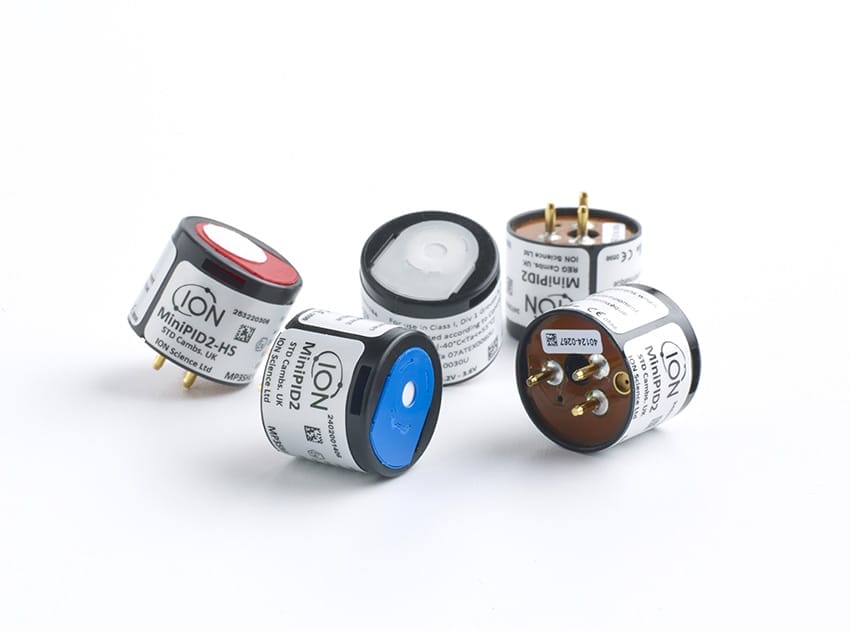
ION SENSE’s PID sensor range delivers rapid response times and ppb-level detection, enabling monitoring systems to identify even trace levels of VOCs in demanding environments. This level of sensitivity is particularly valuable in industries where exposure limits are tightly controlled and early detection can play a key role in protecting workers and maintaining safe operating conditions.
Designed for reliability in real-world conditions, the sensors incorporate several features that address common challenges associated with VOC monitoring. These include superior humidity resistance, which helps maintain stable performance in environments where moisture could otherwise affect measurement accuracy. An anti-contamination design further enhances durability by protecting the sensing elements from contaminants that may be present in industrial settings.
In addition, the PID sensors provide excellent long-term stability, helping to reduce maintenance requirements and improve the consistency of monitoring systems over time. For OEM manufacturers developing gas detection equipment, this stability can translate into lower lifetime costs and improved reliability in the field.
Enabling Seamless Integration for OEM Systems
Beyond the sensors themselves, ION SENSE also offers intelligent PID integration solutions designed to simplify the process of incorporating VOC detection into monitoring systems.
Two dedicated integration boards – ION CONNECT and ION TRANSMIT – provide flexible communication options that support a wide range of applications.

ION CONNECT supports both UART and I²C communication protocols, allowing straightforward integration into compact or embedded systems. Accompanying ION PC software provides a convenient interface for configuring sensor settings, including calibration adjustments, alarm thresholds and response factors, helping developers streamline system setup and optimisation.
For applications that require longer-distance communication or connection to industrial control systems, ION TRANSMIT enables communication via RS-485 using Modbus RTU, as well as 4–20 mA outputs. These widely used protocols allow PID sensors to integrate easily into existing infrastructure such as environmental monitoring networks, building management systems and industrial safety platforms.
Together, these integration solutions enable OEM partners to incorporate advanced VOC detection capabilities into their products with minimal development complexity.
Expanding Air Quality Monitoring with Particulate Matter Detection
While VOC monitoring plays a vital role in workplace safety, many industrial environments must also address the presence of airborne particulate matter.
To support broader air quality monitoring, ION SENSE also offers the NextPM particulate matter sensor, capable of directly measuring PM1, PM2.5 and PM10 particles. Like ION SENSE’s PID sensors, NextPM has been engineered for demanding environments, incorporating anti-contamination design and humidity resistance to maintain reliable performance in challenging conditions.
While PID sensors focus on detecting VOC gases, particulate sensors address a different category of airborne hazards. Together, these complementary technologies provide a more complete picture of air quality within industrial facilities.
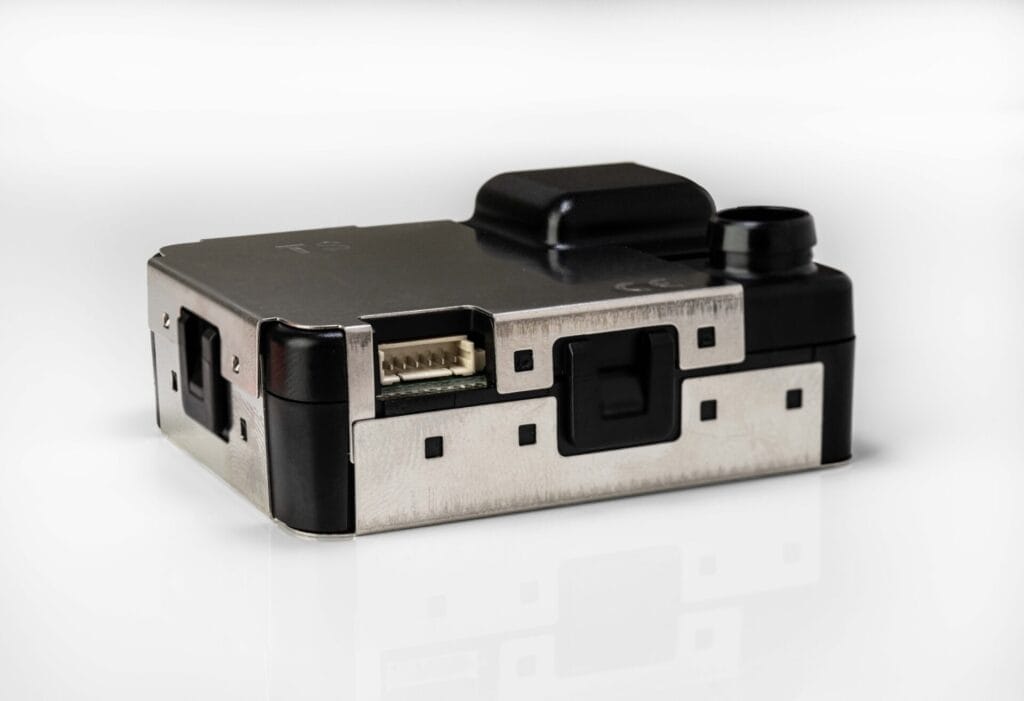
For industries such as lithium-ion battery manufacturing, where both chemical vapours and particulate emissions may be present during different stages of production, combining VOC and particulate monitoring can support more comprehensive environmental management strategies.
Experience Live PID Demonstrations at Booth 1051
Visitors to Booth 1051 at Sensors Converge will have the opportunity to see ION SENSE technology in action.
The sensors team will conduct live demonstrations using the company’s PID sensor range, showcasing the sensors’ ability to detect common VOCs at ppb-level concentrations. These demonstrations provide a practical illustration of how quickly and sensitively PID technology can respond to changes in VOC levels.
In addition to live demos, the team will be available throughout the exhibition to discuss visitors’ unique monitoring challenges and application requirements. Whether developing new detection equipment or upgrading existing safety systems, attendees can explore how seamless PID integration can be achieved using ION SENSE’s technologies.
Register for Sensors Converge 2026
Sensors Converge brings together innovators from across the sensing technology ecosystem, making it an ideal opportunity to explore emerging solutions for environmental monitoring, workplace safety and industrial sensing.

Visitors are invited to meet the ION SENSE team at Booth 1051, learn more about advanced PID integration, and experience live demonstrations of VOC detection technology.
Use code 10086 for a FREE Hall Pass at checkout – register now and meet us there.


